
Author: Rob Moal, CPT | Published: 2026 | Reviewed by: Rob Moal, CPT, FMS, Precision Nutrition
Quick Answer
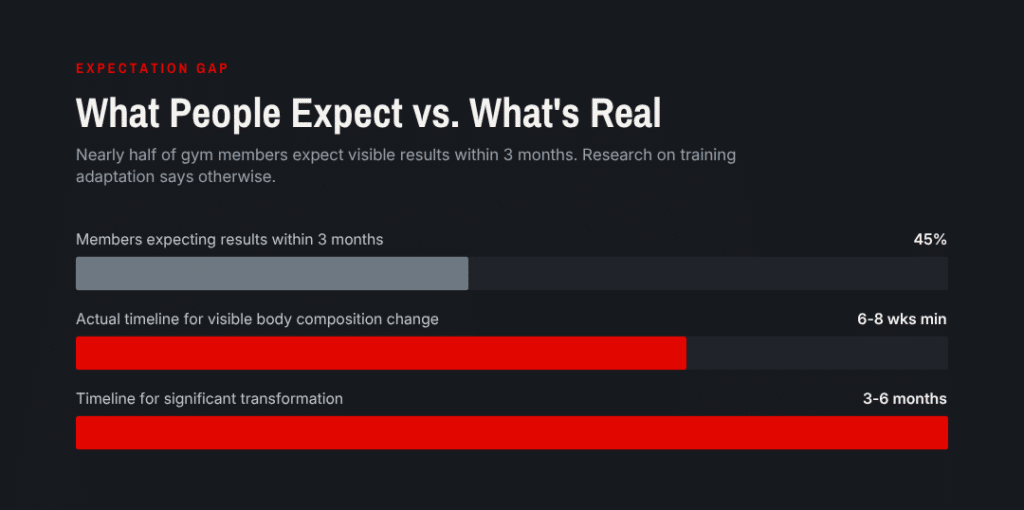
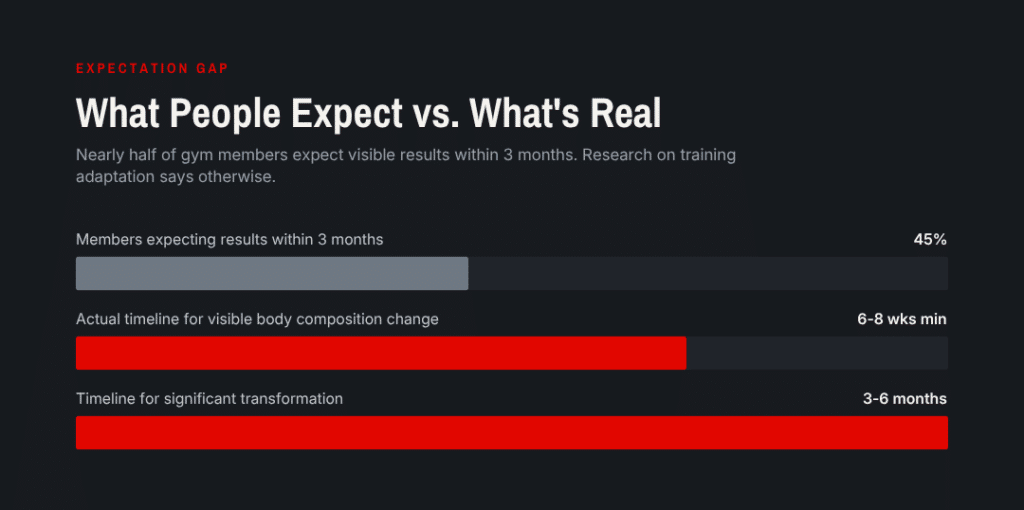
Most people start noticing real changes from personal training within 3 to 4 weeks — better sleep, more energy, improved strength. Visible body composition changes take 6 to 8 weeks with consistent training and solid nutrition. Significant transformation takes 3 to 6 months minimum. The four things that determine your timeline: consistency, protein intake, sleep, and whether your program is actually designed for your goals.
The problem is that most people have been told by marketing that results come faster than they actually do. Three weeks to a flat stomach. Six weeks to a new body. That kind of messaging sets people up to quit right before things actually start happening.
I’ve been training busy professionals in Vancouver for over 20 years, and I’ve seen the same pattern hundreds of times. People who understand the real timeline stay the course. People who don’t quit at week four, right when the body is starting to adapt.
The most common question I get from new clients is some version of how long this is going to take. I get it. You’re committing time, money, and energy. You want to know what you’re signing up for.
The honest answer is it depends on what you mean by results. If you mean feeling better, sleeping better, and moving with less pain, that starts within the first two weeks for most people. If you mean visible changes in the mirror, that’s closer to 6 to 8 weeks with consistent effort. If you mean significant body composition transformation, we’re talking 3 to 6 months minimum.
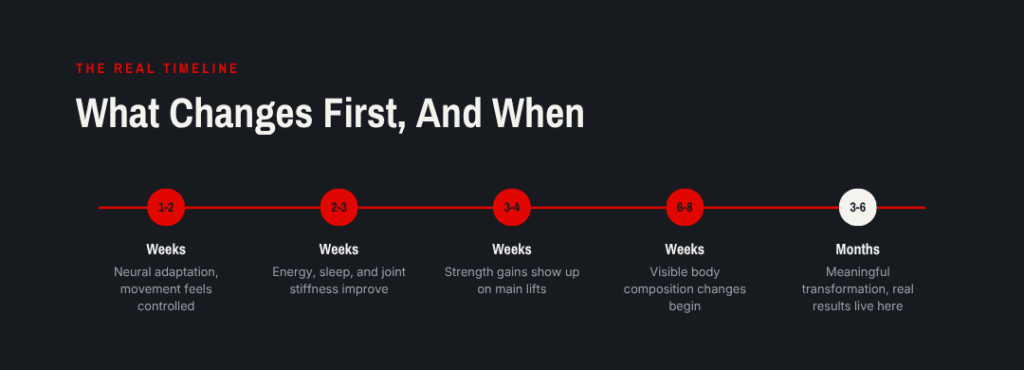
Weeks 1 to 2. The first things that shift are neurological. Your nervous system is learning new movement patterns, improving motor recruitment, and getting more efficient at activating the right muscles. You won’t see this in the mirror, but you’ll feel it. Workouts that felt foreign start to feel more controlled. That’s adaptation happening.
Weeks 2 to 3. Most clients start noticing improved energy, better sleep quality, and reduced joint stiffness. These aren’t small things. For a lot of people, this is the first signal that something real is happening.
Weeks 3 to 4. Strength improvements start showing up. Research on neuromuscular adaptation confirms that early strength gains come from neural efficiency, not muscle size, which is why you get stronger before you look different. Most clients are noticeably stronger on their main lifts within the first month.
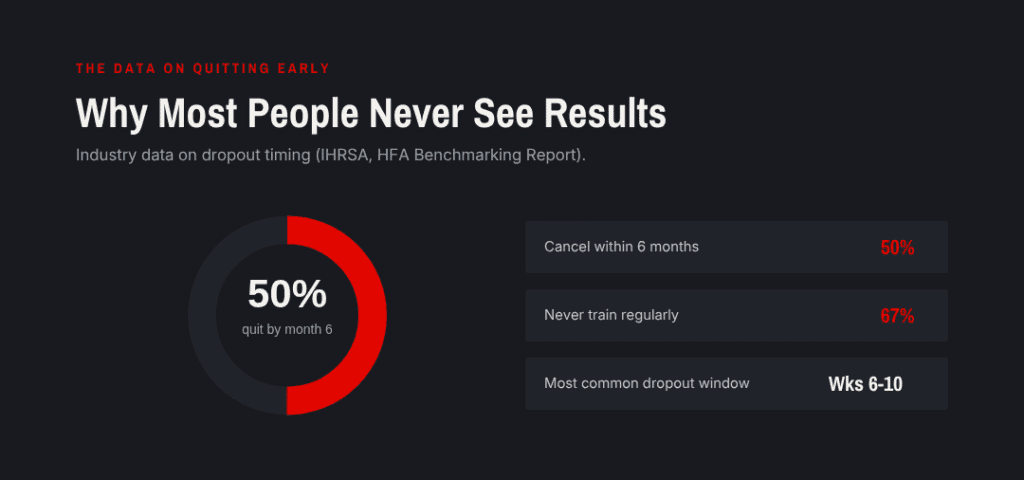
Weeks 6 to 8. This is when visible body composition changes start showing up for most people, provided nutrition is on point and training has been consistent. Clothes fit differently. The mirror starts telling a different story. This is the timeline most people don’t reach because they quit somewhere around week three or four.
Months 3 to 6. Meaningful body composition changes. Significant strength gains. Movement quality that carries over to daily life. This is where the real results live, and it’s why consistency matters more than intensity.
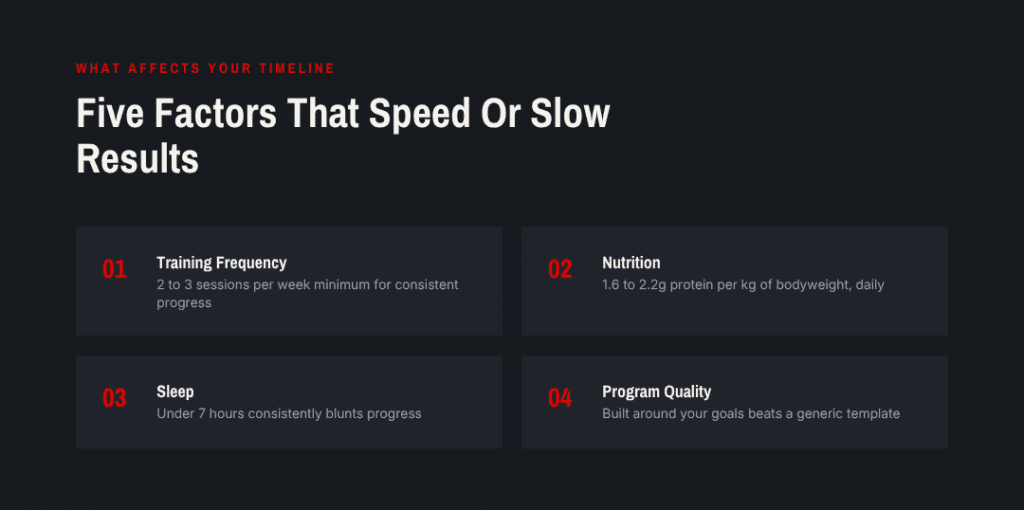
Training frequency. Two to three sessions per week is the minimum for consistent progress. Once a week produces maintenance at best for most people. If you want to get there faster, strength training done consistently beats sporadic intense efforts every time.
Nutrition. You cannot out-train a poor diet. Training creates the stimulus for change. Nutrition determines whether your body has the raw materials to respond. Most clients I work with are under-eating protein; the research-backed target is 1.6 to 2.2 grams per kilogram of bodyweight per day for people who train regularly. Most people are nowhere near that.
Sleep. This is the most underestimated variable. Strength is built during recovery, not during training. Consistently sleeping less than 7 hours will blunt your progress regardless of what else you’re doing right.
Program quality. A program designed around your specific goals, movement quality, and training history produces results faster than a generic template. This is the core argument for working with a personal trainer rather than following something you found online.
Training history. If you’re new to training, results come faster. Your body has a large adaptation reserve. If you’ve been training for years, progress is slower and more deliberate. Both situations require a different approach.

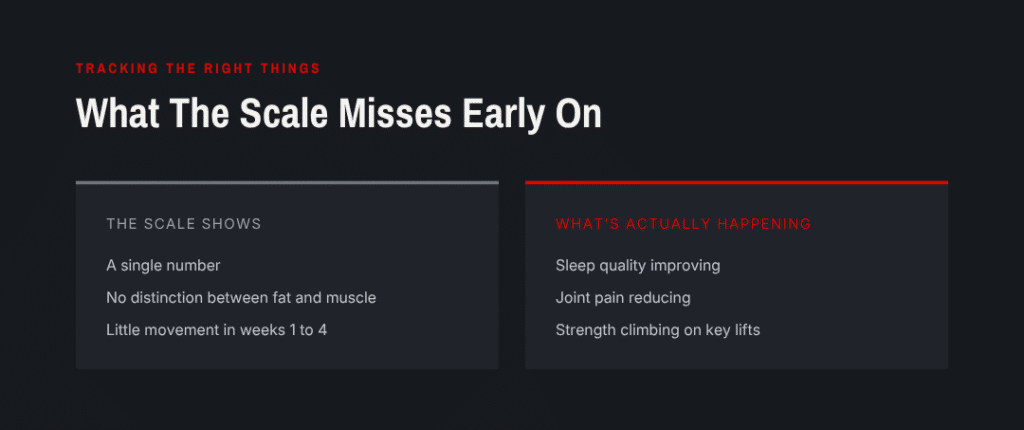
Most people are tracking the wrong things in the early weeks. They step on the scale and don’t see a big number move, and they conclude nothing is working.
What they’re missing is the stuff that doesn’t show up on a scale. Sleep quality is improving. Joint pain is reducing. Energy levels shifting. Clothes fit differently before the scale changes significantly. Strength is going up in movements that were previously a struggle.
These are real results. They’re also the foundation that the visible stuff gets built on. If you dismiss them because they’re not dramatic enough, you’re evaluating the wrong things at the wrong time.
Fat loss coaching done properly is not just about the number on the scale. It’s about changing body composition, losing fat, maintaining or building muscle, which the scale alone doesn’t capture accurately.
Inconsistency. Missing sessions is the single biggest reason people don’t see results on the timeline they expected. Two good weeks followed by a bad week followed by a good week isn’t consistent training. It’s starting over repeatedly.
Changing the program too early. I see this constantly. Someone starts a program, doesn’t see dramatic results in three weeks, and switches to something new. Then the cycle repeats. Getting stronger at a movement requires repeating it consistently over months, not weeks.
Undereating protein. You can train perfectly and sleep well, and still stall if protein intake is too low. Your body doesn’t have the raw material to rebuild.
No assessment at the start. If a trainer doesn’t assess your movement, your history, and your actual goals before building your program, you’re following a generic plan. Generic plans produce generic results on unpredictable timelines.
If you’re working with the right program and still not making progress after 8 to 12 weeks, get blood work done. Low testosterone, thyroid issues, and iron deficiency are common reasons training harder isn’t producing results.
The first changes from personal training are neurological and functional; they happen in weeks 1 to 3, and you feel them before you see them. Visible body composition changes take 6 to 8 weeks minimum with consistent training and nutrition. Significant transformation takes 3 to 6 months. The biggest factors in your timeline are consistency, protein intake, sleep, and whether your program is actually designed for your goals. The people who get results are the ones who understand the real timeline and don’t quit when it feels slow.
Most people feel stronger and more energetic within 2 to 3 weeks. Visible body composition changes typically take 6 to 8 weeks of consistent training and solid nutrition. Significant transformation takes 3 to 6 months minimum.
Four weeks is still early. Neurological and functional changes are happening even if the mirror hasn’t caught up yet. Check your nutrition first — specifically protein intake. Then check consistency. If both are solid, stay the course. The visible changes are usually right around the corner.
Yes. Research consistently shows that people training with a personal trainer make faster progress than those training independently, largely due to program quality, form correction, and accountability.
Two to three times per week is the sweet spot for most people. Once a week produces slow progress at best. More than three times per week is possible but requires appropriate recovery built into the program.
Reassess your nutrition, sleep, and training consistency first. If all three are genuinely on point, get blood work done. Low testosterone, thyroid dysfunction, and iron deficiency can all stall progress regardless of how well everything else is structured.
Yes. Online personal training produces the same results as in-person when the program is custom-built, accountability is real, and the coach adjusts based on actual progress. The timeline is the same.
How to Choose a Personal Trainer (What Most People Get Wrong)
Private Training vs Gym Membership Vancouver
Why Strength Training Is More Effective Than Cardio for Weight Loss
About the Author
Rob Moal is a Vancouver-based personal trainer with 20+ years of experience. FMS, CAFS (Grey Institute), Precision Nutrition, CanFitPro certified. Trains busy professionals at Evolve Strength in downtown Vancouver. Featured in GQ, Men’s Journal, Forbes, and Eat This Not That.