
Author: Rob Moal, CPT | Published: 2026 | Reviewed by: Rob Moal, CPT, FMS, Precision Nutrition
Quick Answer
Choosing a personal trainer comes down to five things: verified credentials, relevant experience with your specific goals, a structured assessment process, transparent pricing, and a communication style you can work with. The biggest mistake is hiring based on price or proximity instead of fit and track record. A trainer should assess you before programming anything, be able to explain every exercise choice, and show you real client results — not stock photos.
This sounds like a basic question, but most people can’t answer it clearly, which is part of why they end up with the wrong trainer.
A personal trainer designs and delivers a structured exercise program based on your specific goals, movement quality, training history, and any limitations you’re working around. They coach your form in real time, progress your program as you adapt, and keep you accountable to something more than your own motivation on a Tuesday morning.
What a personal trainer does not do: hand you a generic template from a binder, watch you use equipment you already know how to use, or count your reps while checking their phone.
The difference between those two things is the difference between results and a recurring charge that doesn’t move anything. If you’re looking at personal training in Vancouver, the standard you should be holding any trainer to is the first description, not the second.
Not all certifications are equal, and the fitness industry has many of them. Here’s a practical breakdown.
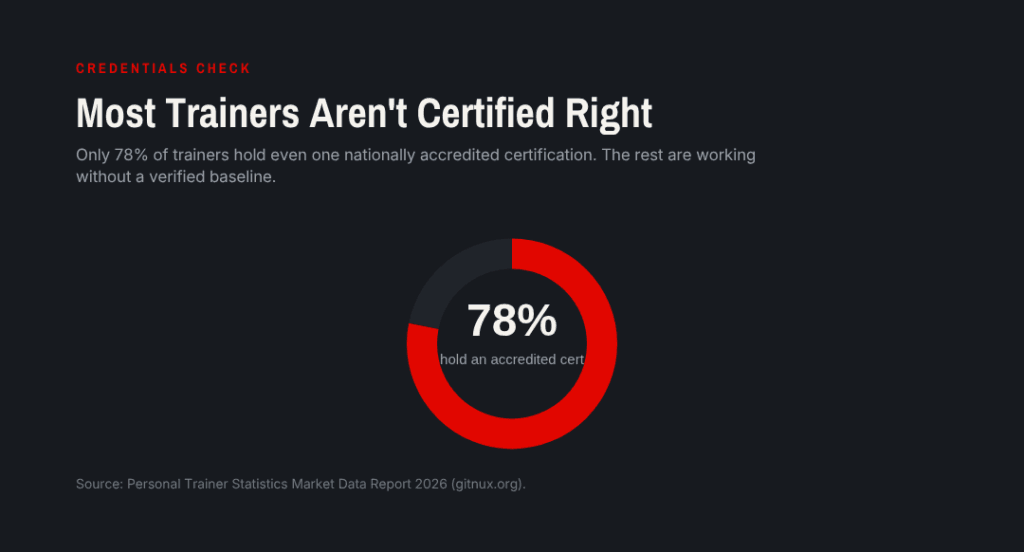
A nationally or internationally accredited personal training certification is the floor, not the ceiling. In Canada, look for CSEP-CPT (Canadian Society for Exercise Physiology), NSCA-CPT, or NASM-CPT. These require passing an exam, a CPR certification, and ongoing continuing education to maintain. The CSEP is the gold standard for Canadian fitness professionals and is worth understanding before you start your search.
If your goal is fat loss, you want someone with a background in nutrition coaching. Precision Nutrition is the most respected in the industry. If you’re dealing with movement issues or coming back from injury, look for FMS (Functional Movement Screen), CAFS (Grey Institute), or corrective exercise credentials. If you’re 35+ and want to build strength specifically, NSCA-CSCS (Strength and Conditioning Specialist) is meaningful.
A 25-year-old trainer six months out of their cert is not the same as someone who has spent 10–20 years working with professionals your age, dealing with the movement issues, schedule constraints, and goals you actually have. Ask how long they’ve been training, who their typical client is, and what results they can show you.
Credentials tell you someone cleared a baseline. They don’t tell you if that person can actually coach.
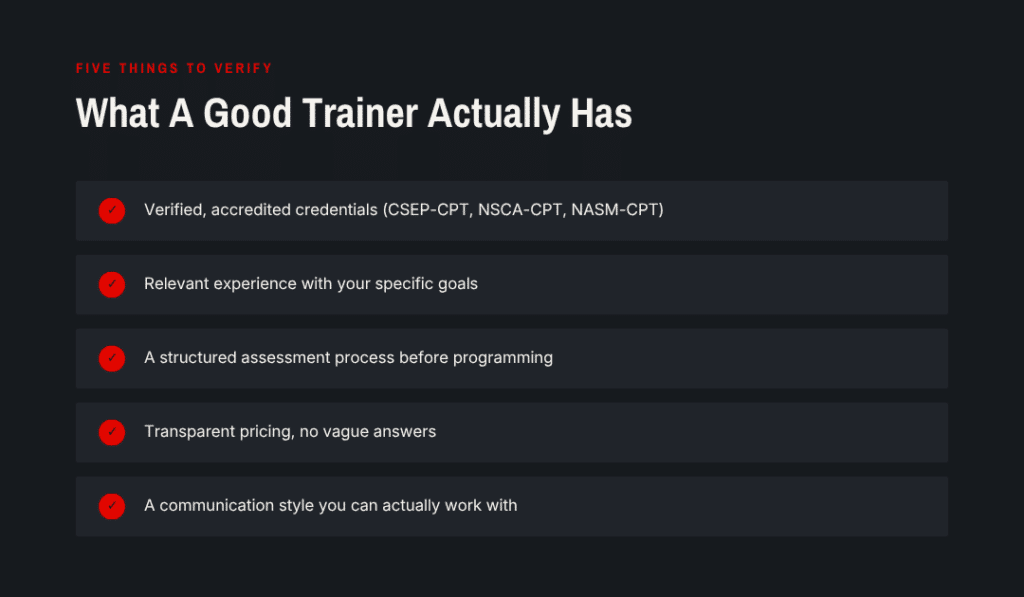
A proper trainer does not put you through a workout on day one. They sit down with you, understand your goals, your history, and what’s going on in your body. At a minimum, this includes a movement screen or postural assessment.
If you ask a trainer why you’re doing a specific exercise and the answer is vague, that’s a problem. Every exercise in your program should serve a specific purpose. A good trainer can tell you what it’s training, why that matters for your goals, and how it fits into your overall program.
Not stock photos. Not “client results may vary” testimonials. Actual before-and-afters, client stories, real outcomes they’ve produced with people who look like you and want what you want.
If you’re a busy professional in Vancouver who needs to get results in limited time windows, you want a trainer who actually works with that population. If fat loss is the primary goal, you want someone who specifically coaches fat loss and understands how nutrition integrates with training. If you’re dealing with tight hips, old injuries, or chronic pain, mobility and corrective work have to be part of the conversation.
The trainer who tells you what you want to hear isn’t serving you. The one who tells you your program needs to change, your nutrition needs to change, or that you need to manage expectations on the timeline- that’s someone worth working with.
These come up more than they should.
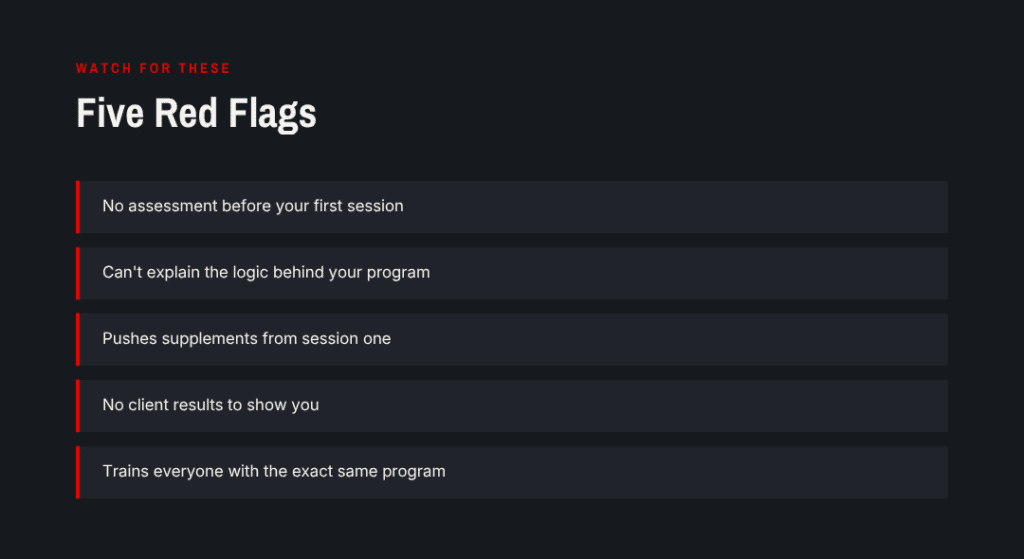
If a trainer is ready to start your program without asking about your history, movement, or goals in any structured way, walk away. You can’t build a program without an assessment any more than a doctor can treat without a diagnosis.
“This is what works” is not an explanation. Every program decision should have a rationale. If a trainer can’t articulate it, they probably copied it.
Some trainers make a commission on supplements. The ones who lead with that conversation before they know your goals or your diet are not putting your results first.
Every experienced trainer has before-and-afters, testimonials, or client stories. If there’s nothing to show, ask why.
They Train Everyone The Same Way
One program does not fit a 45-year-old executive managing lower back pain and a 28-year-old athlete training for a competition. If a trainer can’t clearly articulate how their approach differs across populations, that’s a problem.
This comparison comes up constantly, and the answer is more nuanced than most people make it.
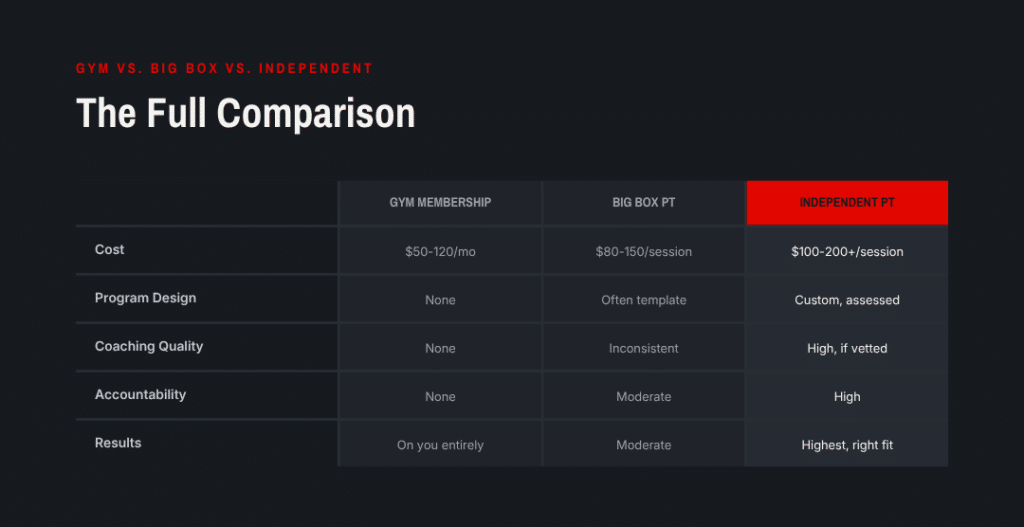
A gym membership gets you access. Full stop. Everything else that you do, whether you do it right, whether you show up, is on you. Research published in the Journal of Sports Science and Medicine shows people working with a personal trainer demonstrate significantly greater improvements in strength, motivation, and program adherence compared to those training alone.
Big box gym trainers can be excellent, but the model has issues. High turnover, trainers who are there to sell memberships as much as coach, and programs that often don’t evolve because the trainer isn’t invested in your long-term outcome the way an independent coach is.
Independent personal training costs more per session. The relevant comparison is results per dollar, not cost per month. If you want a deeper breakdown of this, I’ve written about it in detail in the private training vs gym membership post.
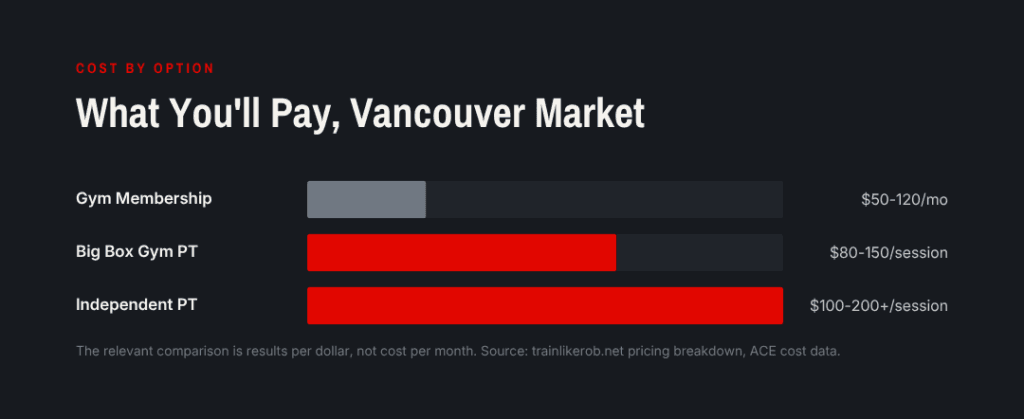
In-person personal training in downtown Vancouver runs $100–$200+ per session, depending on the trainer’s credentials, experience, and format. Premium facilities, coaches with significant track records, and specialized expertise all push that number up.
Online coaching is more accessible, typically $150–$400/month for a structured program with ongoing support and check-ins. For people with some training background who can execute independently, online personal training produces strong results at a lower price point than in-person.
The American Council on Exercise puts the average personal training session in North America at $40–$70, but Vancouver’s market runs higher. Budget-tier options exist, but the trainer quality tends to reflect the price. The more useful framing: what does a year of no results cost you, versus a year of structured coaching that actually works?
These are the ones most people don’t think to ask.
The answers to these questions will tell you more than the trainer’s Instagram following or how fit they look.
Key Takeaways
Look for a nationally accredited certification — CSEP-CPT, NSCA-CPT, or NASM-CPT at a minimum. Beyond that, specialization credentials in the area relevant to your goals (nutrition, corrective exercise, strength) and verifiable client results are what separate experienced coaches from beginners.
The first session should not be a workout. It should be an assessment — a conversation about your goals, history, and limitations followed by a movement screen or postural analysis. If a trainer jumps straight into training without any of that, it’s a red flag.
Two to three times a week is the most common starting point for people who want consistent results. Some clients train once a week with a coach and do additional sessions independently using their program. Frequency depends on your goals, schedule, and budget.
For people with some training background who can execute independently, yes. You get structured programming, accountability, and expert oversight at a lower cost than in-person coaching. For complete beginners or people with significant movement issues, in-person coaching is the better starting point.
A personal trainer typically works with the general population of clients on health, fitness, fat loss, and strength goals. A strength and conditioning coach is primarily trained to improve athletic performance. There’s overlap — many trainers hold both credentials — but if you’re not training for sport, a personal trainer with the right specializations is what you need.
Most clients notice meaningful strength and energy improvements within 3–4 weeks. Visible body composition changes typically take 6–8 weeks of consistent training and nutrition. Anyone promising faster than that without the context of your specific situation is overselling.
About the Author
Rob Moal is a Vancouver-based personal trainer with 20+ years of experience. FMS, CAFS (Grey Institute), Precision Nutrition, CanFitPro certified. Trains busy professionals at Evolve Strength in downtown Vancouver. Featured in GQ, Men’s Journal, Forbes, and Eat This Not That.