
Author: Rob Moal, CPT | Published: 2026 | Reviewed by: Rob Moal, CPT, FMS, Precision Nutrition
Quick Answer
Most people quit training because their program doesn’t fit their actual life — not because they lack discipline. Motivation is temporary by design. What builds long-term consistency is structure: scheduled sessions, realistic expectations, and a backup system for busy weeks. Three sessions per week done consistently for years beats any intense program you can’t maintain.
Every January the gyms are packed. By March they’re half empty.
That’s not a motivation problem. It’s a program problem, and almost nobody diagnoses it correctly.
I’ve trained over 200 clients in 20+ years. The ones who fall off aren’t lazy. They’re running programs that were never built for their actual life, then blaming themselves when the program breaks under real-world pressure.
Motivation spikes when something’s new and fades within weeks. That’s just how it works. Building a routine around “staying motivated” is like building a business around hoping customers show up. You need structure instead: scheduled sessions, a program built around your actual week, habits that don’t require you to feel like it.
When training is on your calendar like a meeting you can’t cancel, it stops being a decision you make every day. That’s the shift.
Social media sells six-week transformations. Real fat loss, real strength gains, real changes in how you move take months. If your timeline doesn’t match Instagram, there’s nothing wrong with you. The timeline was never real.
Track process, not outcomes. Train three times a week. Add weight to the bar. Walk daily. Those compound. Watching the scale every Monday does not.
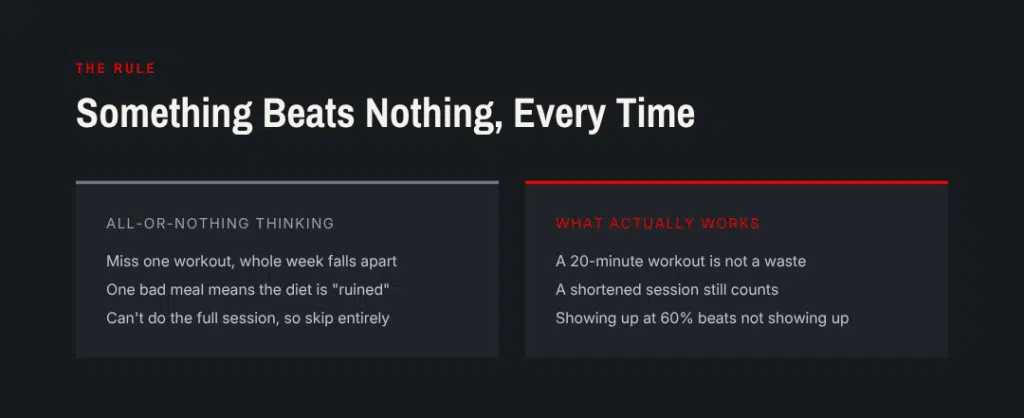
This is the pattern I see most in new clients. Miss one workout, write off the week. One bad meal, diet’s “ruined.” Can’t do the full session, so skip it entirely.
A 20-minute workout still counts. Showing up at 60% beats not showing up. Something beats nothing, every time, no exceptions.
Three well-structured sessions a week build real strength and real body composition change. That’s what I build most programs around. Not because it’s easy. Because it’s sustainable, and sustainable beats perfect.
Five or six training days a week sounds committed. For a busy professional, it’s a schedule you can’t hold, and the first missed week feels like failure even though the program set you up for it.
Work gets busy. Kids get sick. Travel happens. These aren’t exceptions to your training. They’re just life, and if your plan doesn’t account for them, it will fail the first time they show up.
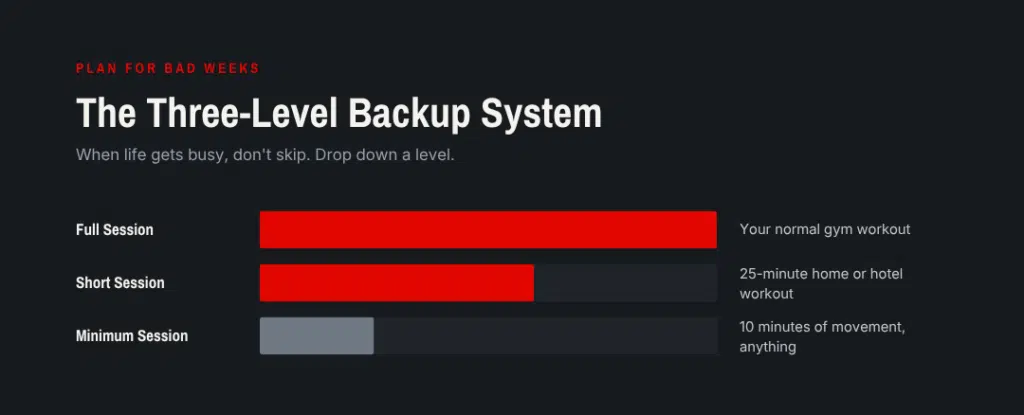
Build three levels into every plan:
Full session, your normal gym workout. Short session, 25 minutes at home or in a hotel room. Minimum session, 10 minutes of movement, anything.
Bad week hits, you drop a level. You don’t skip. The habit survives.
If starting a workout means hunting for gear, driving somewhere, and figuring out what to do on the fly, you’ll skip it the moment your energy dips. Lay out your clothes the night before. Have a default workout ready for the days the gym isn’t happening. Keep the schedule where you can see it.
Small environmental fixes beat willpower every time.
Someone else’s transformation photo has nothing to do with your history, your stress, or where you started. Comparing guarantees you feel behind. Track your own numbers instead: strength, steps, energy, sleep. Those move before the mirror does.
People who stay consistent don’t think of themselves as “trying to get fit.” They think of themselves as someone who trains. Small distinction, huge difference. You stop negotiating with yourself about whether to go. You just go.
That shift takes time, and it starts with showing up imperfectly, over and over, until it’s just what you do.
Results don’t come from your best workouts. They come from your most consistent ones. The person training three times a week for three years will always beat the person who goes hard for six weeks and burns out.
Stop chasing perfect. Build something that survives your worst weeks. That’s what actually changes your body and keeps it changed.
If you’re a busy professional in Vancouver and you’re tired of starting over, book a free consultation and let’s build something that fits your actual life.
Why do I keep losing motivation to train? Motivation is temporary. Consistency comes from structure: scheduled sessions, a program built for your life, and habits that don’t depend on how you feel that day.
How many days a week do I need to train? Three well-structured sessions a week is enough to build strength and change your body composition. Consistent at three beats sporadic at six.
What do I do when life gets too busy to train? Drop to a shorter session instead of skipping. Even 10 minutes keeps the habit alive. Missing one session is fine. Missing two weeks is where progress erodes.
Is it normal to fall off training more than once? Yes. Most consistently fit people fell off and restarted multiple times. The difference is they fixed the system each time instead of blaming their discipline.
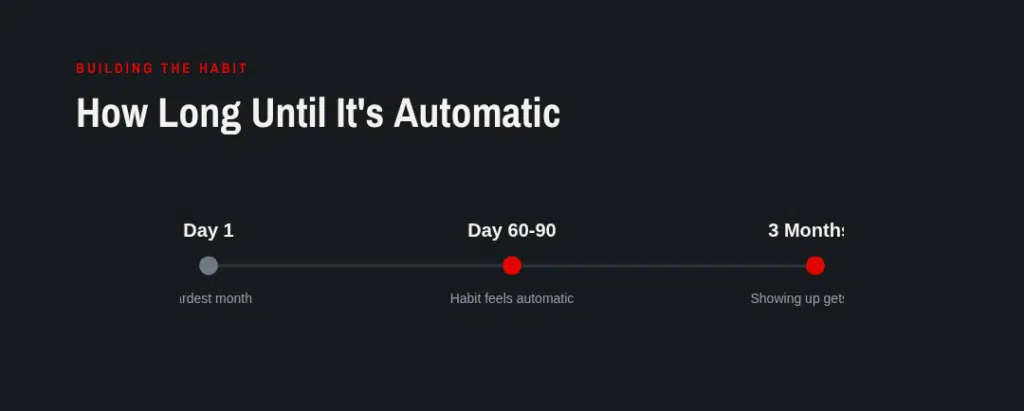
How long before training feels automatic? Most research points to 60 to 90 days of repeated behaviour. Month one is the hardest. After three months, showing up gets a lot easier.
Do I need a personal trainer to stay consistent? Not necessarily. But a trainer removes the two biggest barriers: not knowing what to do, and not having anyone checking in. For busy professionals in Vancouver, that structure is often the difference between another restart and actual progress.
About the Author
Rob Moal is a Vancouver-based personal trainer with 20+ years of experience. FMS, CAFS (Grey Institute), Precision Nutrition, CanFitPro certified. Trains busy professionals at Evolve Strength in downtown Vancouver. Featured in GQ, Men’s Journal, Forbes, and Eat This Not That.