By Rob Moal, Online Personal Trainer | FMS, CAFS, Precision Nutrition | Published: 2026
I get asked about protein more than almost anything else. Usually it’s one of two questions: “Am I eating enough?” or “Is this whole high-protein thing just marketing?” Here’s the honest answer. Both things can be true at once, and most of what you’re reading online doesn’t leave room for that.
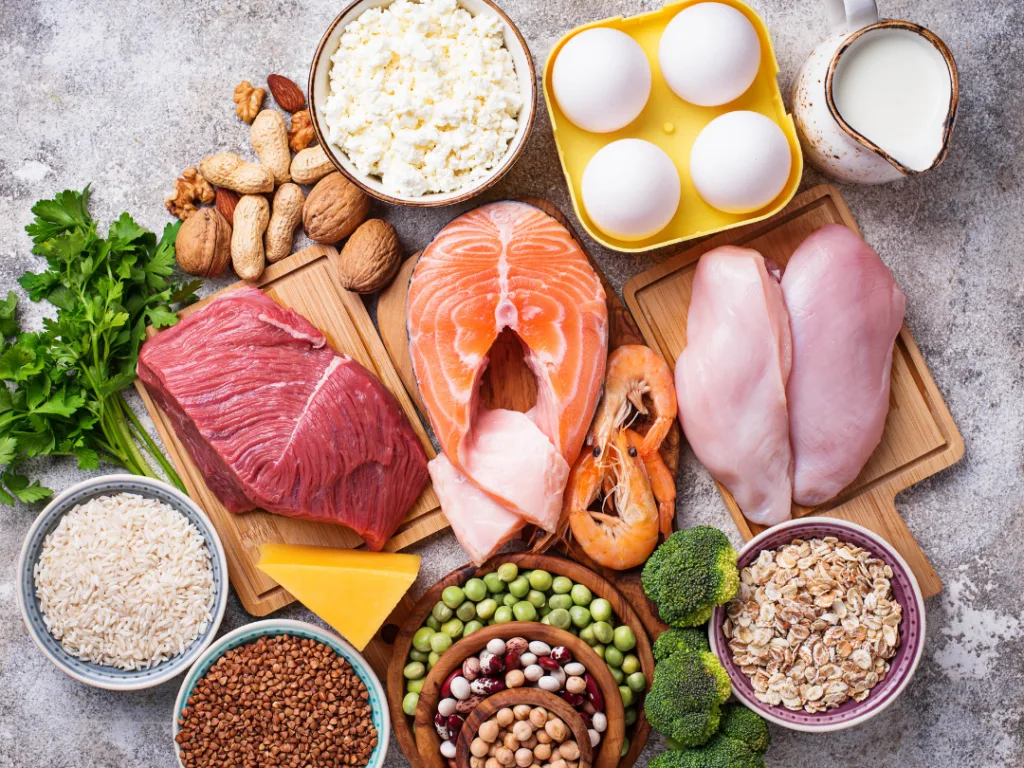
Start with what 0.8 grams per kilogram of body weight actually is. It’s the amount needed to keep 97.5% of sedentary adults from getting sick. That’s it. It was never built to support muscle, performance, or body composition. If you’re not training and not trying to change how you look or perform, that number’s probably fine for you.
The problem is people treat it like a ceiling instead of a floor.
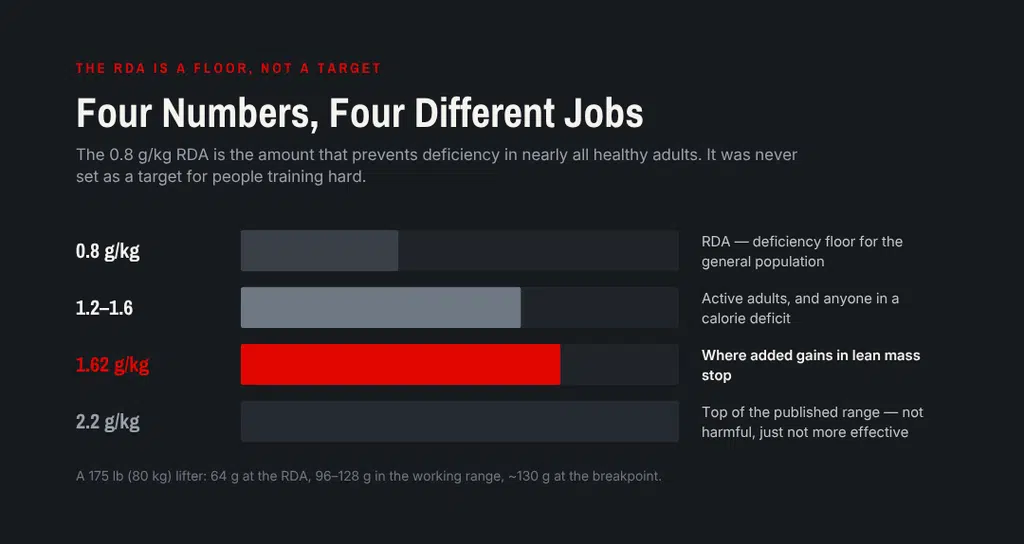
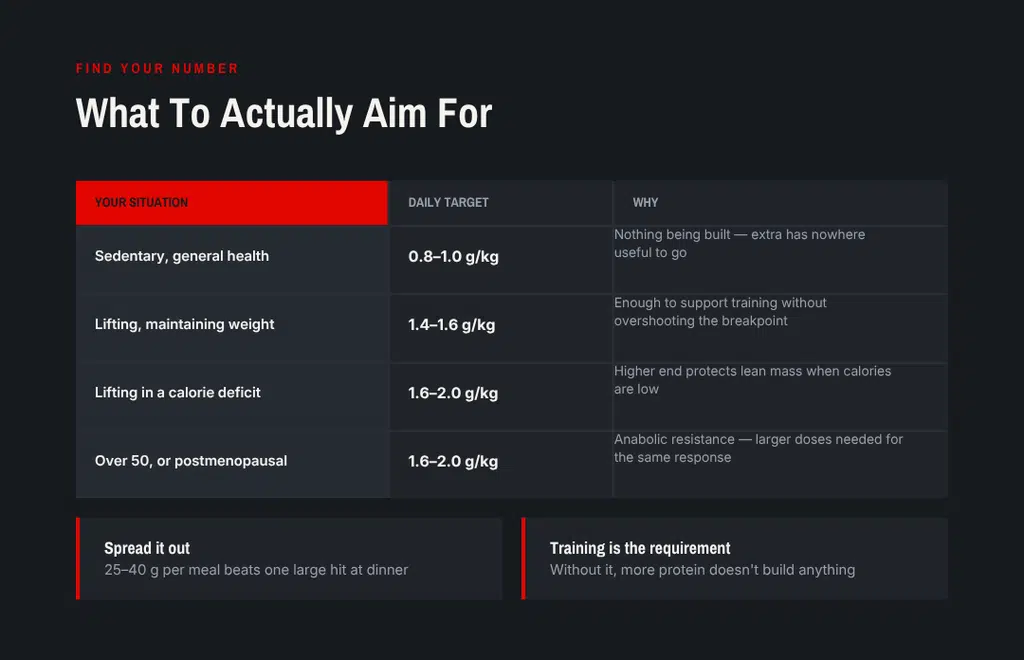
The most cited study in this space pooled 49 trials and 1,863 people. It found protein supplementation improved strength, lean mass, and muscle fibre size during resistance training, and that the benefit flattened out around 1.6 grams per kilogram per day. Past that point, more protein isn’t doing anything for you; it’s just expensive.
Here’s the number that should actually catch your attention. The average person in that dataset was already eating about 1.4 grams per kilogram, 75% above the RDA, before the study even started supplementing them further. The researchers’ own conclusion was blunt: 0.8g/kg isn’t enough if you’re trying to build strength and muscle through training.
A separate dose-response analysis using a different method found strength kept climbing up to about 1.5 grams per kilogram, then stopped. Two different research teams, two different approaches, landing almost in the same spot. That’s not a coincidence; that’s convergence.
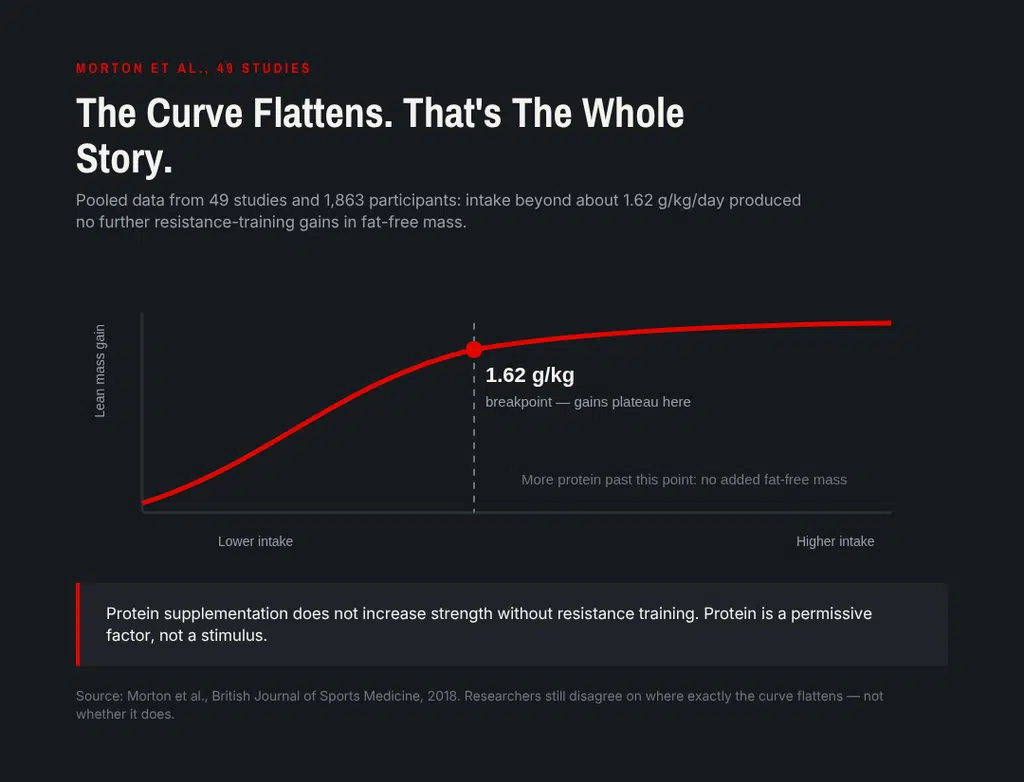
I think a lot of the skepticism about protein is aimed at the wrong target. The 1.2 to 1.6g/kg range isn’t the scam. What’s past it is.
Social media loves throwing around 2.2 grams per kilogram or higher like it’s the entry fee for taking your training seriously. It’s not. Past roughly 2.2 to 2.4g/kg, the extra protein just gets burned for energy. You’re not building more; you’re just paying more.
Be skeptical of the end. Just don’t let that skepticism drag you back down to the RDA if you’re actually training.
Amy was 42, training hard, and the scale wasn’t moving no matter what she did. That’s usually where people start blaming willpower. It wasn’t willpower.
When we ran a full assessment, two things showed up. Her training intensity wasn’t hitting the percentages needed to drive real hormonal and metabolic adaptation, and her intake, protein specifically, wasn’t matched to what her training actually demanded. She was eating like someone doing light activity while training like someone who needed to recover from real work.
We fixed both. Adjusted her intensity targets, rebuilt her nutrition around what her training actually required, and in 8 weeks she lost 8 pounds of fat and gained 5 pounds of muscle. That’s not a small fat loss number padded by muscle loss. That’s an actual recomposition, and it happened because the input matched the output for the first time.

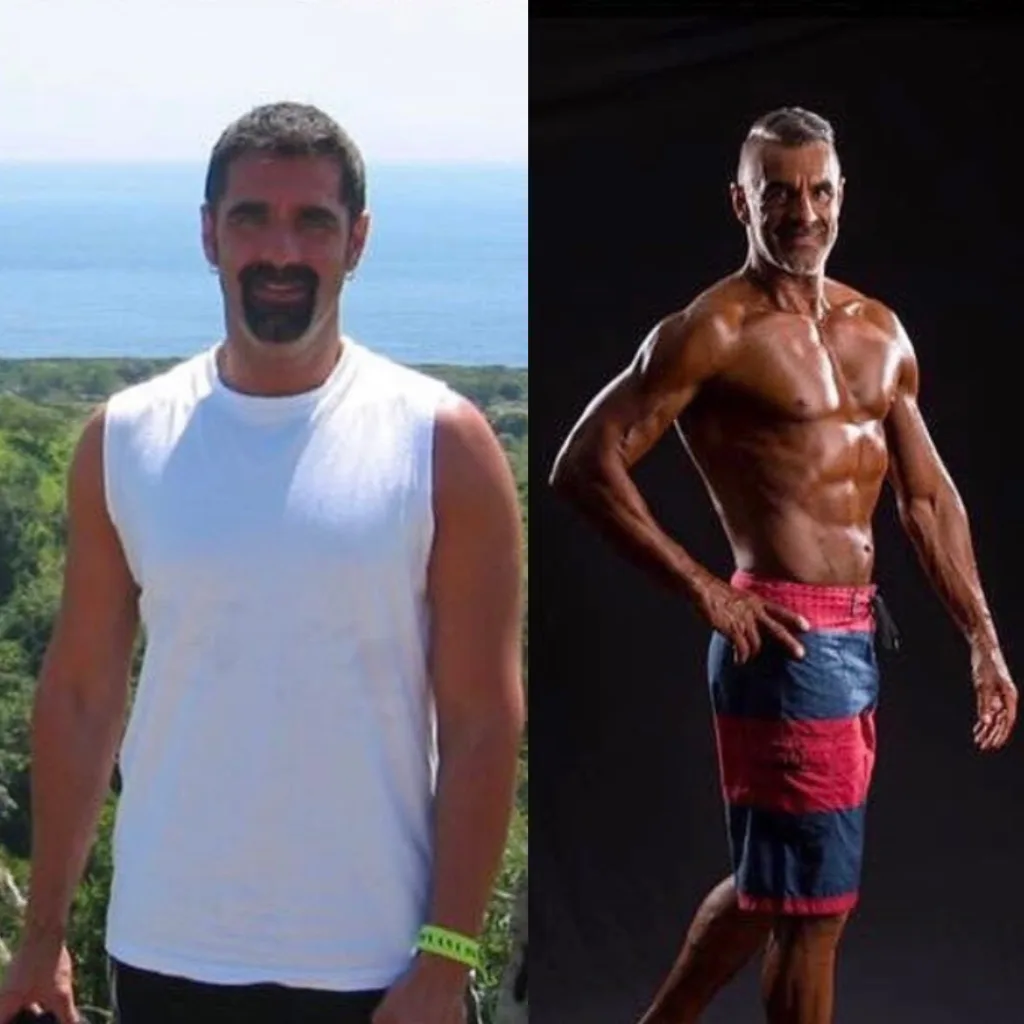
Mark started training with me at 48. He was dealing with depression, running a demanding accounting career, and raising his kids solo. Training became the thing holding the rest of his life together, and two years in, he decided he wanted to compete in Men’s Physique.
We spent 6 months in an offseason building phase, taking him from 177 to 217 lbs while keeping body fat under 17%, all while he was managing IBS through the entire process. Getting that kind of muscle gain without protein intake dialled in isn’t possible; IBS makes hitting consistent protein even harder, not easier. From there, we shifted into a 16-week pre-contest phase, and he stepped on stage at 189 lbs and 7% body fat, winning his first Masters Men’s Physique title. Five years later, he’s still training.
That’s the version of “how much protein do I need” that doesn’t fit in a single number. It’s a moving target across years, adjusted for a real gut condition, a real career, and real kids, and it still worked because the fundamentals never changed even when everything else did.
Yes, in both directions. Older adults typically need more protein per kilogram to get the same muscle-building response as someone younger, not less. That runs against most general nutrition advice about aging, which tends to assume less is safer. It isn’t, not here.
Protein needs go up during a deficit, not down. It’s protecting the muscle you already have while your body’s under pressure to break tissue down for fuel, and it’s controlling hunger while you’re eating less overall. If you’re mid-fat-loss phase, protein is the lever that matters more, not less, while everything else is restricted.
For most people training consistently, 1.2 to 1.6 grams per kilogram covers it with margin to spare. Want the exact number instead of doing the math yourself? My protein calculator gets you there in seconds. If you want the full breakdown on hitting that number without living on shakes, my free protein guide covers it.
If you’re building this into a broader training and nutrition plan and want someone adjusting the numbers with you as your training and weight change, that’s what personal training is for.
Partly. The push toward 1.2 to 1.6g/kg is backed independently by academic meta-analyses and professional nutrition bodies, not just supplement marketing. The genuinely oversold part is intakes past roughly 2.2g/kg, where the evidence for extra benefit runs out.
Probably not much more. The RDA of 0.8g/kg is a reasonable target for sedentary adults. The higher recommendations are specifically for people doing resistance training.
No. Research specifically shows protein supplementation without resistance training does not increase muscle strength. Training is the stimulus; protein supports the response to it.
Yes. Protein needs increase during a calorie deficit to help preserve muscle mass and control hunger while you’re eating less overall.
You might also find these helpful:
British Journal of Sports Medicine / PMC. “A systematic review, meta-analysis and meta-regression of the effect of protein supplementation on resistance training-induced gains in muscle mass and strength in healthy adults.”
Sports Medicine – Open. “Synergistic Effect of Increased Total Protein Intake and Strength Training on Muscle Strength: A Dose-Response Meta-analysis of Randomized Controlled Trials.”