
By Rob Moal, Online Personal Trainer | FMS, CAFS, Precision Nutrition | Published: 2026
Quick Answer
The best foods for fat loss are high in protein, relatively low in calories, and filling enough to make a moderate calorie deficit sustainable. Chicken and broccoli are fine — but they are not the only options, and the narrower your food choices, the less likely you are to stick to the approach. A fat loss diet that works long-term is one you can maintain indefinitely, not one that requires you to eat the same two foods every day.

One of the most common reasons fat loss attempts fail is not willpower; it is boredom. Eating the same restricted set of foods every day works for about two weeks. Then it stops, the rebound kicks in, and most people end up further back than where they started.
The most successful fat loss approaches I have seen are built around variety and sustainability, not restriction. The foods that support fat loss are not a short list of diet foods. They are a category of foods that are high in protein, high in volume or fibre, relatively low in calories, and flexible enough to eat in various combinations without losing the will to continue.
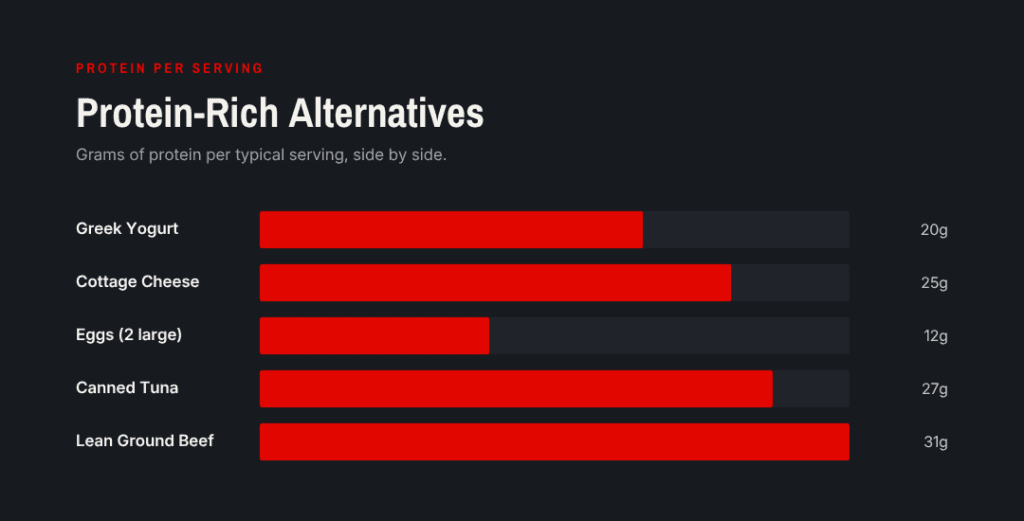
Plain Greek yogurt has roughly 17 to 20 grams of protein per cup at minimal caloric cost. Versatile, filling, and available everywhere. Full-fat versions are more satiating. Low-fat versions are lower calorie. Both work depending on where your calories are sitting that day.
Consistently underrated. Cottage cheese delivers roughly 25 grams of protein per cup and digests slowly. Research published in Medicine and Science in Sports and Exercise by Res et al. found that casein protein consumed before sleep improves overnight muscle protein synthesis — which makes cottage cheese particularly useful as a late meal option.
Two eggs provide roughly 12 grams of protein at minimal caloric cost. A 2013 meta-analysis in the British Medical Journal by Rong et al. found no significant association between egg consumption and cardiovascular disease risk, effectively rehabilitating eggs from decades of bad press. The satiety they produce is well-documented.
Tuna, sardines, salmon, mackerel. High protein, significant omega-3 content, cheap, shelf-stable, and fast to prepare. One of the most nutritionally dense, convenient protein sources available and consistently underused.
Ground beef at 90 to 95% lean, pork tenderloin, and sirloin steak are all high-protein options with manageable calorie counts. Red meat also provides creatine, iron, zinc, and B12, nutrients that support training performance and recovery. The demonization of red meat in diet culture has been significantly overblown relative to the evidence.
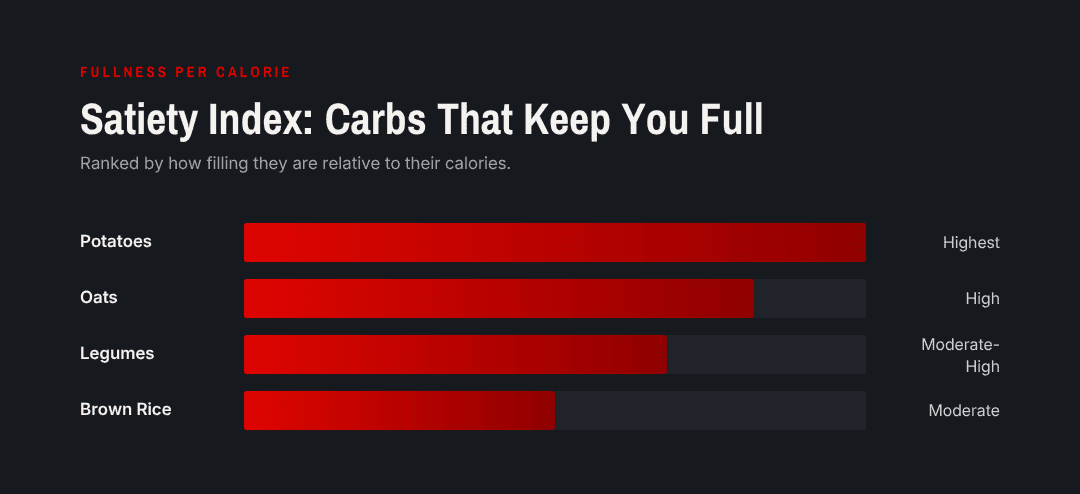
A 1995 satiety index study by Holt et al. ranked white potatoes as the most satiating food tested, significantly more filling per calorie than bread, rice, or pasta. The reputation potatoes have in diet culture is not supported by the evidence. They are one of the better carbohydrate options for anyone managing a calorie deficit.
High in fibre, slow-digesting, and practical as a pre-training breakfast. Sustained energy without blood sugar spikes. One of the most practical options for people who train in the morning.
Lentils, chickpeas, black beans. Both protein and fibre in significant quantities, a combination that produces high satiety at low caloric cost. Genuinely filling in a way refined carbohydrate meals are not.
Avocado, olive oil, eggs, fatty fish, nuts, and full-fat dairy in moderation. Fat is not the enemy of fat loss; excess calories are. Healthy fats support hormonal function, joint health, and satiety. Eliminating them is unnecessary and counterproductive for anyone doing regular resistance training.
No single food causes or prevents fat loss. Fat loss is produced by a consistent calorie deficit over time, with adequate protein to preserve muscle. Eat variety. Hit your protein. Stay in a moderate deficit. The specific foods matter far less than the consistency of the overall approach, which is why the nutrition side of body composition work focuses on building sustainable habits, not meal plans that expire after three weeks.
Key Takeaways
The best fat loss foods are high in protein (Greek yogurt, cottage cheese, eggs, fish, lean meat), high in fibre and volume (legumes, vegetables, oats, potatoes), and filling enough to make a calorie deficit sustainable. Variety matters for long-term adherence.
No. Any combination of foods that produces a consistent calorie deficit with adequate protein supports fat loss. Restricting yourself to a handful of foods makes the diet unsustainable for most people.
Yes. Cottage cheese is high in protein (roughly 25 grams per cup), slow-digesting, and low in calories. It is one of the most practical high-protein foods for fat loss, particularly as a late meal or snack.
Yes. Potatoes consistently rank highly on satiety indices — significantly more filling per calorie than most other carbohydrate sources. The reputation they have in diet culture is not supported by the evidence.
Eat the foods you actually enjoy that happen to be high in protein and filling. The most important variable in fat loss is sustaining a moderate calorie deficit over time — you cannot sustain an approach built around foods you dislike.
Rob Moal
Rob Moal is an online personal trainer with over 20 years of experience training busy professionals, executives, and athletes. He holds credentials in FMS, CAFS (Grey Institute), and Precision Nutrition, and has been featured in GQ, Forbes, Men’s Journal, Parade, and Eat This Not That.
Book a Free Intro Call