

Vancouver has no shortage of personal trainers. The problem isn’t finding options, it’s knowing how to evaluate them before you’ve already committed money and time to the wrong one.
This is a practical guide to what actually matters when choosing a personal trainer in Vancouver: what credentials are worth checking, what the assessment process should look like, how to read the red flags, and what questions to ask before you start.
Personal training is an unregulated industry in Canada. Anyone can call themselves a personal trainer. That makes it more important to verify credentials, not less.
The certifications that carry weight are from organizations with standardized exams and continuing education requirements. In Canada, the benchmark is the CSEP-CPT — the Canadian Society for Exercise Physiology Certified Personal Trainer. Other well-regarded certifications include the NSCA-CPT and ACE-CPT. These require demonstrated knowledge of anatomy, exercise science, and program design.
Weekend certifications, online courses completed in a few hours, and impressive Instagram followings are not substitutes. Ask directly what certification they hold and who issued it. A qualified trainer will answer without hesitation.

Credentials tell you a trainer passed a test. Experience tells you whether they can actually coach. The two don’t always go together.
What matters most is whether a trainer has worked with people in your specific situation, your age range, your goals, your injury history, and your current fitness level. A trainer who primarily works with athletes may not be the right fit for someone in their 40s managing chronic back pain. A trainer who specializes in beginners may not have the programming depth for someone trying to break through an intermediate plateau.
Ask specifically: what types of clients do you work with most? What results have you gotten for people starting where I’m starting? The answers tell you more than any certification.
Before a single workout is written, a serious trainer assesses you. This means looking at your movement patterns, identifying mobility restrictions and compensations, reviewing your injury history, understanding your current fitness baseline, and clarifying your actual goals, not just the surface version, but what you want your body and life to look like in six months.
An assessment takes time. It requires knowledge. And it’s the only legitimate starting point for a program that’s actually built for you rather than adapted from a template.
If a trainer skips the assessment and starts programming immediately, that tells you exactly how they work. The program won’t be built around your reality; it’ll be built around a generic model with your name on it.
The session itself is a small fraction of what you’re paying for. What happens between sessions, how a trainer communicates, responds to questions, adjusts your program, and holds you accountable is where most of the value either exists or doesn’t.
If a trainer is vague on any of these before you’ve signed anything, that pattern won’t improve once you’re paying them.
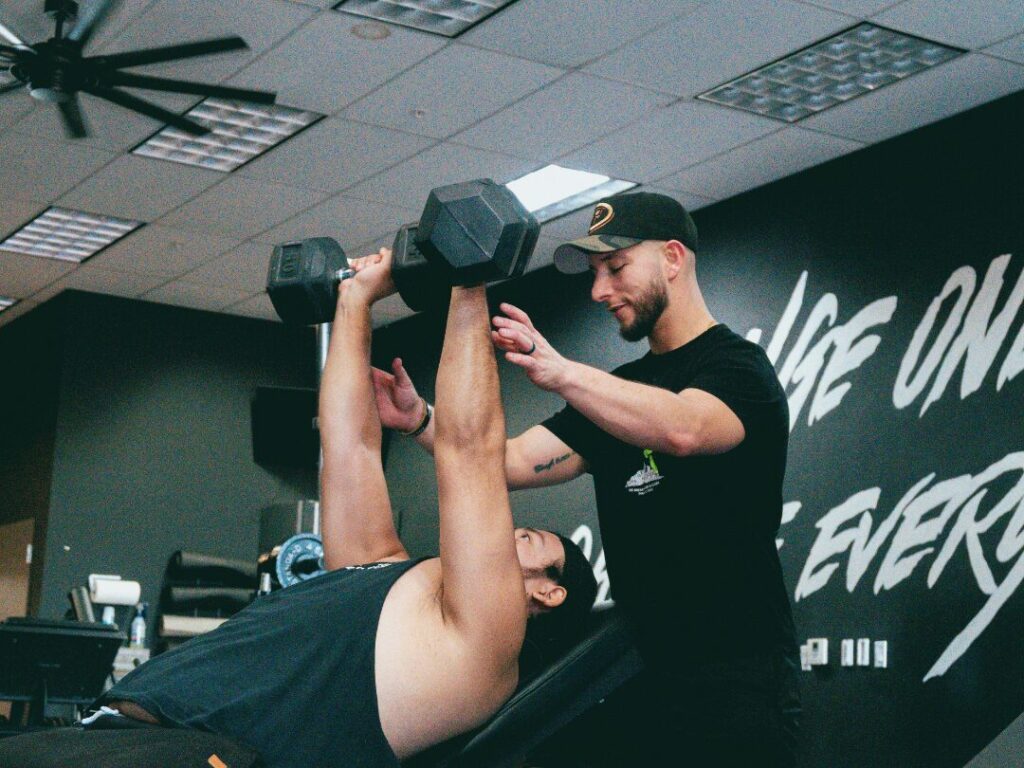
Most people default to in-person training, but online coaching has become a legitimate primary option — not a fallback. The right format depends on your situation.
In-person makes the most sense if you’re a beginner building movement foundations, rehabbing an injury that requires real-time feedback, or you know from experience that physical accountability is what keeps you consistent.
Online coaching makes more sense if your schedule is unpredictable, you travel frequently, you’re comfortable filming your lifts for form review, or you want professional coaching at a lower monthly cost. Many Vancouver clients use a hybrid setup, one in-person session per week with additional programmed sessions throughout the week, which tends to be the most practical arrangement for busy professionals.
In-person training in Vancouver typically runs $70–$120 for a 60-minute session. Online coaching runs $200–$500 per month, depending on the level of support. The per-session rate is less useful as a comparison point than what’s actually included in the quality of programming, the consistency of coaching, and the results that follow.
Cheap training that doesn’t work costs more in wasted time than good training that does.
A trainer who can answer all five of those clearly and specifically is worth talking to further. One who gets defensive or vague on any of them isn’t.
The right trainer accelerates results, helps you avoid the injuries that set people back months, and makes the habit stick long enough to become permanent. The wrong one costs you time, money, and the frustration of starting over.
Take the time to do one consultation before you commit. Pay attention to how they communicate before you’ve given them anything; that’s the clearest signal of what the actual coaching relationship will look like.
The Real Benefits Of Working With A Personal Trainer In Downtown Vancouver - Vancouver Personal Trainer | Train Like Rob says:
[…] unsure about the benefits of personal training? Check out Finding the Best Personal Trainer Near Me: to learn how strength training, accountability, and custom plans come together for real […]